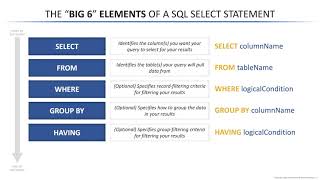
Web Reference: The HAVING clause is used to filter the results of a GROUP BY query based on aggregate functions. Unlike the WHERE clause, which filters individual rows before grouping, HAVING filters groups after the aggregation has been performed. In SQL, the HAVING clause: 1. Filters data based on defined criteria. 2. Is commonly used in creating reports. 3. Is only used in SELECT. 4. Works with GROUP BY. If you know the GROUP BY clause, you know that it is used to aggregate values: it puts records into groups to calculate aggregation values (statistics) for them. HAVING filters records acc... Oct 8, 2023 · One of its vital features is the HAVING clause, which allows us to filter results after performing an aggregate function. This article delves deep into the world of the HAVING clause, distinguishing it from WHERE, and showcasing its applications with various aggregate functions.
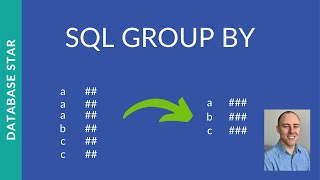
YouTube Excerpt: Full MySQL Course: https://www.analystbuilder.com/courses/mysql-for-data-analytics In this lesson we are going to take a look at ...
Information Profile Overview
Sql Having Clause Explained With - Latest Information & Updates 2026 Information & Biography

Details: $41M - $76M
Salary & Income Sources

Career Highlights & Achievements





Assets, Properties & Investments
This section covers known assets, real estate holdings, luxury vehicles, and investment portfolios. Data is compiled from public records, financial disclosures, and verified media reports.
Last Updated: April 4, 2026
Information Outlook & Future Earnings

Disclaimer: Disclaimer: Information provided here is based on publicly available data, media reports, and online sources. Actual details may vary.