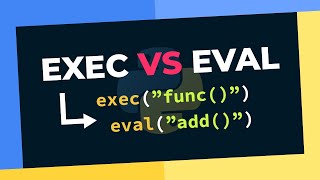
Web Reference: Python’s eval() allows you to evaluate arbitrary Python expressions from a string-based or compiled-code-based input. This function can be handy when you’re trying to dynamically evaluate Python expressions from any input that comes as a string or a compiled code object. Jul 23, 2025 · Let us analyze the code a bit: The above function takes any expression in variable x as input. Then the user has to enter a value of x. Finally, we evaluate the Python expression using the eval () built-in function by passing the expr as an argument. One of the useful applications of eval() is to evaluate Python expressions from a string. For example, load the string representation of a dictionary from a file:
YouTube Excerpt: The built-in
Information Profile Overview
Python Eval Function Evaluating Python - Latest Information & Updates 2026 Information & Biography

Details: $9M - $52M
Salary & Income Sources

Career Highlights & Achievements


Assets, Properties & Investments
This section covers known assets, real estate holdings, luxury vehicles, and investment portfolios. Data is compiled from public records, financial disclosures, and verified media reports.
Last Updated: April 5, 2026
Information Outlook & Future Earnings

Disclaimer: Disclaimer: Information provided here is based on publicly available data, media reports, and online sources. Actual details may vary.