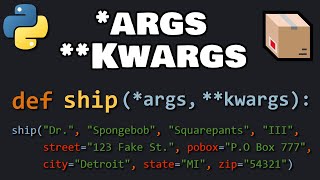
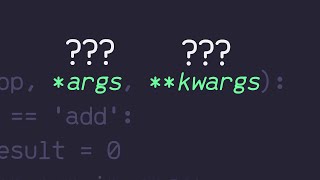
Web Reference: Sep 20, 2025 · In Python, *args and **kwargs are used to allow functions to accept an arbitrary number of arguments. These features provide great flexibility when designing functions that need to handle a varying number of inputs. In this step-by-step tutorial, you'll learn how to use args and kwargs in Python to add more flexibility to your functions. You'll also take a closer look at the single and double-asterisk unpacking operators, which you can use to unpack any iterable object in Python. By default, a function must be called with the correct number of arguments. However, sometimes you may not know how many arguments that will be passed into your function. *args and **kwargs allow functions to accept a unknown number of arguments.
YouTube Excerpt: python
Information Profile Overview
Python Args Kwargs Are Awesome - Latest Information & Updates 2026 Information & Biography
Details: $11M - $26M
Salary & Income Sources
Career Highlights & Achievements
![[Practice Problems] Python *args vs **kwargs - Visually Explained Content](https://i.ytimg.com/vi/ZA_zbYTNIRY/mqdefault.jpg)




Assets, Properties & Investments
This section covers known assets, real estate holdings, luxury vehicles, and investment portfolios. Data is compiled from public records, financial disclosures, and verified media reports.
Last Updated: April 4, 2026
Information Outlook & Future Earnings

Disclaimer: Disclaimer: Information provided here is based on publicly available data, media reports, and online sources. Actual details may vary.