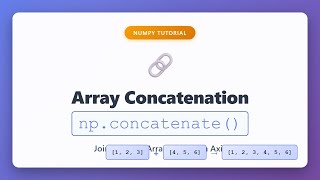
Web Reference: numpy.concatenate # numpy.concatenate(arrays, /, axis=0, out=None, *, dtype=None, casting='same_kind') # Join a sequence of arrays along an existing axis. Parameters: a1, a2, …sequence of array_like The arrays must have the same shape, except in the dimension corresponding to axis (the first, by default). axisint, optional The axis along which the arrays will be joined. If axis is None ... Jul 12, 2025 · The numpy.concatenate () function combines multiple arrays into a single array along a specified axis. This function is particularly useful when working with large datasets or performing operations that require merging data from different sources. In this beginner-friendly guide, we’ll walk through the different functions that we can use to join NumPy arrays, such as np.concatenate(), np.stack(), and more. Each function serves a specific purpose and works best under different conditions.
YouTube Excerpt: Master
Information Profile Overview
Numpy Array Concatenation Tutorial Np - Latest Information & Updates 2026 Information & Biography
Details: $26M - $56M
Salary & Income Sources

Career Highlights & Achievements

![Celebrity Numpy Basics [4] | Numpy Array Concatenation and Splitting Profile](https://i.ytimg.com/vi/y9jvMIDd1K8/mqdefault.jpg)





Assets, Properties & Investments
This section covers known assets, real estate holdings, luxury vehicles, and investment portfolios. Data is compiled from public records, financial disclosures, and verified media reports.
Last Updated: April 6, 2026
Information Outlook & Future Earnings

Disclaimer: Disclaimer: Information provided here is based on publicly available data, media reports, and online sources. Actual details may vary.