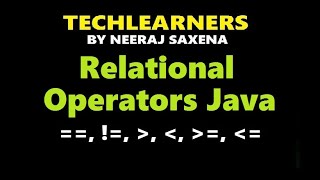
Web Reference: Jul 12, 2025 · The relational operators in Java return a boolean value of true or false, depending on the result of the comparison. For example, num1 > num2 returns true if num1 is greater than num2, and false otherwise. Relational operators are the backbone of decision-making in Java programming, allowing developers to compare values and control program flow through conditional logic. These operators return boolean values that determine how your application branches, loops, and responds to different data scenarios. Java relational operators are used to compare two values. These operators return a boolean result: true if the condition is met and false otherwise. Relational operators are commonly used in decision-making statements like if conditions and loops.
YouTube Excerpt: How does
Information Profile Overview
Java Relational Operators Explained Compare - Latest Information & Updates 2026 Information & Biography

Details: $54M - $92M
Salary & Income Sources
Career Highlights & Achievements


Assets, Properties & Investments
This section covers known assets, real estate holdings, luxury vehicles, and investment portfolios. Data is compiled from public records, financial disclosures, and verified media reports.
Last Updated: April 5, 2026
Information Outlook & Future Earnings

Disclaimer: Disclaimer: Information provided here is based on publicly available data, media reports, and online sources. Actual details may vary.