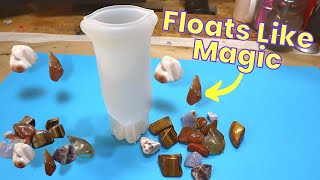
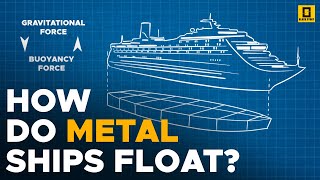
Web Reference: Apr 24, 2017 · The principle may seem relatively simple: Light objects float and heavy objects sink. However, you can make even heavy objects float by taking advantage of surface area and weight dispersal. Kids and adults alike can enjoy making even dense objects float like feathers. Oct 30, 2024 · Buoyancy is a fascinating phenomenon that governs why objects float or sink in fluids. This concept is not only fundamental in physics but also in everyday life and technology, influencing fields as diverse as shipbuilding, atmospheric sciences, and medicine. To find the buoyant force, we must find the weight of water displaced. We can do this by using the densities of water and steel given in Table 1. We note that, since the steel is completely submerged, its volume and the water’s volume are the same. Once we know the volume of water, we can find its mass and weight.
YouTube Excerpt: It can be difficult to suspend
Information Profile Overview
How To Float Heavy Objects - Latest Information & Updates 2026 Information & Biography
Details: $4M - $22M
Salary & Income Sources
Career Highlights & Achievements


![Why do big ships float? [Buoyancy and flotation explained] Profile](https://i.ytimg.com/vi/Z3vgsp4vKQs/mqdefault.jpg)



Assets, Properties & Investments
This section covers known assets, real estate holdings, luxury vehicles, and investment portfolios. Data is compiled from public records, financial disclosures, and verified media reports.
Last Updated: April 5, 2026
Information Outlook & Future Earnings

Disclaimer: Disclaimer: Information provided here is based on publicly available data, media reports, and online sources. Actual details may vary.