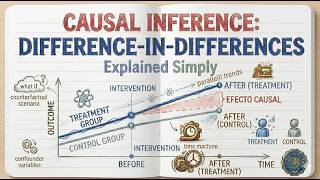
Web Reference: Difference in differences requires data measured from a treatment group and a control group at two or more different time periods, specifically at least one time period before "treatment" and at least one time period after "treatment." The difference-in-difference (DID) technique originated in the field of econometrics, but the logic underlying the technique has been used as early as the 1850’s by John Snow and is called the ‘controlled before-and-after study’ in some social sciences. Differences-in-Differences regression (DID) is used to asses the causal effect of an event by comparing the set of units where the event happened (treatment group) in relation to units where the event did not happen (control group).
YouTube Excerpt: Difference-in-Differences
Information Profile Overview
Difference In Differences Explained - Latest Information & Updates 2026 Information & Biography

Details: $61M - $86M
Salary & Income Sources

Career Highlights & Achievements





Assets, Properties & Investments
This section covers known assets, real estate holdings, luxury vehicles, and investment portfolios. Data is compiled from public records, financial disclosures, and verified media reports.
Last Updated: April 3, 2026
Information Outlook & Future Earnings
Disclaimer: Disclaimer: Information provided here is based on publicly available data, media reports, and online sources. Actual details may vary.